Reusable straws are a fantastic step towards a more sustainable lifestyle, helping reduce plastic waste one sip at a time. Yet, the initial enthusiasm often hits a snag when it comes to cleaning them, especially when the dedicated straw brush is nowhere to be found. The thought of lingering residues, unseen grime, or even mold can quickly turn that eco-friendly habit into a hygienic nightmare. But what if you could keep your reusable straws sparkling clean and germ-free using simple household items and clever techniques, all without a single brush? This guide will unveil ingenious DIY methods and practical advice, transforming the daunting task of brush-free straw cleaning into a simple and effective part of your daily routine.
Why Cleaning Reusable Straws is Essential (Even Without a Brush)
Maintaining impeccable hygiene for your reusable straws is not just about aesthetics; it’s crucial for your health. Over time, beverage residues, especially from sugary drinks, smoothies, or milk, can accumulate inside the narrow tubes. This dark, moist environment becomes a breeding ground for bacteria, mold, and yeast, leading to unpleasant odors, altered drink tastes, and potential health risks. Without thorough cleaning, these hidden contaminants can cause digestive issues or other illnesses. The challenges of reaching every internal surface without a brush might seem daunting, but ignoring the buildup can compromise the very purpose of choosing a reusable straw: a clean, healthy, and sustainable sipping experience.
Common Types of Reusable Straws and Their Cleaning Needs
Reusable straws come in various materials, each with unique characteristics that influence the best cleaning approach, especially when a brush isn’t available.
- Stainless Steel Straws: These are highly durable and generally dishwasher-safe. However, their opaque nature means you can’t visually confirm cleanliness, making thorough internal cleaning critical. They are excellent candidates for boiling and strong soaking solutions.
- Silicone Straws: Flexible and soft, silicone straws are comfortable to use but can sometimes attract lint or dust. They are often dishwasher-safe and can withstand boiling, though prolonged exposure to very harsh chemicals might affect their elasticity over time.
- Glass Straws: Offering a clear view of any remaining debris, glass straws are easy to visually inspect. While elegant, they are fragile and require careful handling. They can be boiled but should never be subjected to sudden temperature changes (like plunging hot glass into cold water) to prevent cracking.
- Bamboo Straws: As a natural product, bamboo straws are porous and require specific care to prevent mold and mildew. They should not be put in the dishwasher or soaked for extended periods. Gentle soaking and thorough air drying are paramount for these eco-chic options.
Understanding your straw material is the first step toward choosing the most effective and safest brush-free cleaning method.
Ingenious DIY Methods to Clean Reusable Straws Without a Brush
When your trusty straw brush is nowhere in sight, these resourceful DIY methods step in to save the day, ensuring your reusable straws are spotless and hygienic.
The Hot Water & Soap Soak Method
|
Our Picks for the Best Bottle brush in 2026
As an Amazon Associate I earn from qualifying purchases.
|
||
| Num | Product | Action |
|---|---|---|
| 1 | Amazon Brand - Mama Bear Baby Bottle Brush with Nipple Cleaner and Suction Cup Stand, White (Pack of 3) |

|
| 2 | Momcozy Bottle Brush Kit with Push-Press Foam Design - Newborn Essentials Gift, Portable Cleaning Tool for Home & Travel, Baby Bottle Cleaner Brush for Breast Pumps & Nipples, Green |
|
| 3 | Holikme Bottle Brush Tube Cleaning Lab Set with Long Handle, Cup Cleaner for Washing Narrow Neck Beer Wine Decanter Pipes Lids Sinks Cap Covers, White |
|
| 4 | OXO Tot Bottle Brush with Stand, Baby Bottle Brush |
|
| 5 | Scotch-Brite Glass and Water Bottle Brush, Long-Lasting, Safe on Glassware, Shaker Bottles, Food Processors, & More, Non-slip handle, Durable, Reusable, Clean in Top Rack of Your Dishwasher |
|
| 6 | ROSEOK 2 in 1 Long Handle Bottle Brush with Straw Brush for Cleaning Glass, Sports Bottle, Coffee Mug,Navy Blue,1 Pack |
|
| 7 | ALINK 16 inch Long Bottle Brush Cleaner for Washing Wine/Beer/Sport Well/Thermos/Glass, Hummingbird Feeder and Long Narrow Neck Sport Bottles |
|
| 8 | MR.SIGA Long Handle Bottle Brush, Flexible Scrub Brush for Water Bottles, Glasswares, Mugs, Black, 2 Pack |
|
| 9 | Holikme 6 Pack Bottle Brush Set, 14" Long Handle Stainless Steel Bottle Cleaner Brush, 3 Straw Brushes, 3-in-1 Bottle Cleaning Brush for Water Bottle, Antistatic Lab Brushes, Straws Black |
|
| 10 | Munchkin Sponge Bottle Brush, Grey/Sage, 2 Count (Pack of 1) |
|
This is your first line of defense against everyday grime and light residue. It’s simple, effective, and suitable for almost all straw types.
Steps:
- Rinse Immediately: As soon as you finish your drink, rinse the straw under hot running water. Cover one end with your finger to build pressure, then release to flush out loose debris.
- Prepare Soak: Fill a tall glass or basin with very warm, soapy water. Use a few drops of regular dish soap.
- Soak: Submerge your straws completely in the soapy water. Let them soak for at least 15-30 minutes, or even a few hours for more stubborn grime.
- Agitate & Rinse: After soaking, cap the glass (if possible) and shake it vigorously. This creates turbulence that helps dislodge particles. Alternatively, hold each straw under hot running water, continuing to flush and rub the exterior with your fingers.
Pipe Cleaner / Wire Method (Improvised Scrubbing)
If you have craft pipe cleaners or thin, flexible wire (like floral wire, ensuring it’s food-safe and clean), you can create a makeshift internal scrubber.
Steps:
- Prepare: Bend a pipe cleaner in half or attach a small, clean piece of cloth/paper towel to the end of a flexible wire, securing it tightly.
- Lubricate: Apply a few drops of dish soap to the makeshift scrubber and dampen it with warm water.
- Scrub: Carefully thread the pipe cleaner or wire through the straw, working it back and forth gently. The fuzzy texture of the pipe cleaner or the cloth on the wire will help scrub the interior walls.
- Rinse: Flush thoroughly with hot water until no soap or debris remains.
Salt and Water Scrub (for Odors & Tough Stains)
This method utilizes the natural abrasive quality of salt to tackle tougher stains and unpleasant odors. It’s particularly effective for stainless steel and glass straws.
Steps:
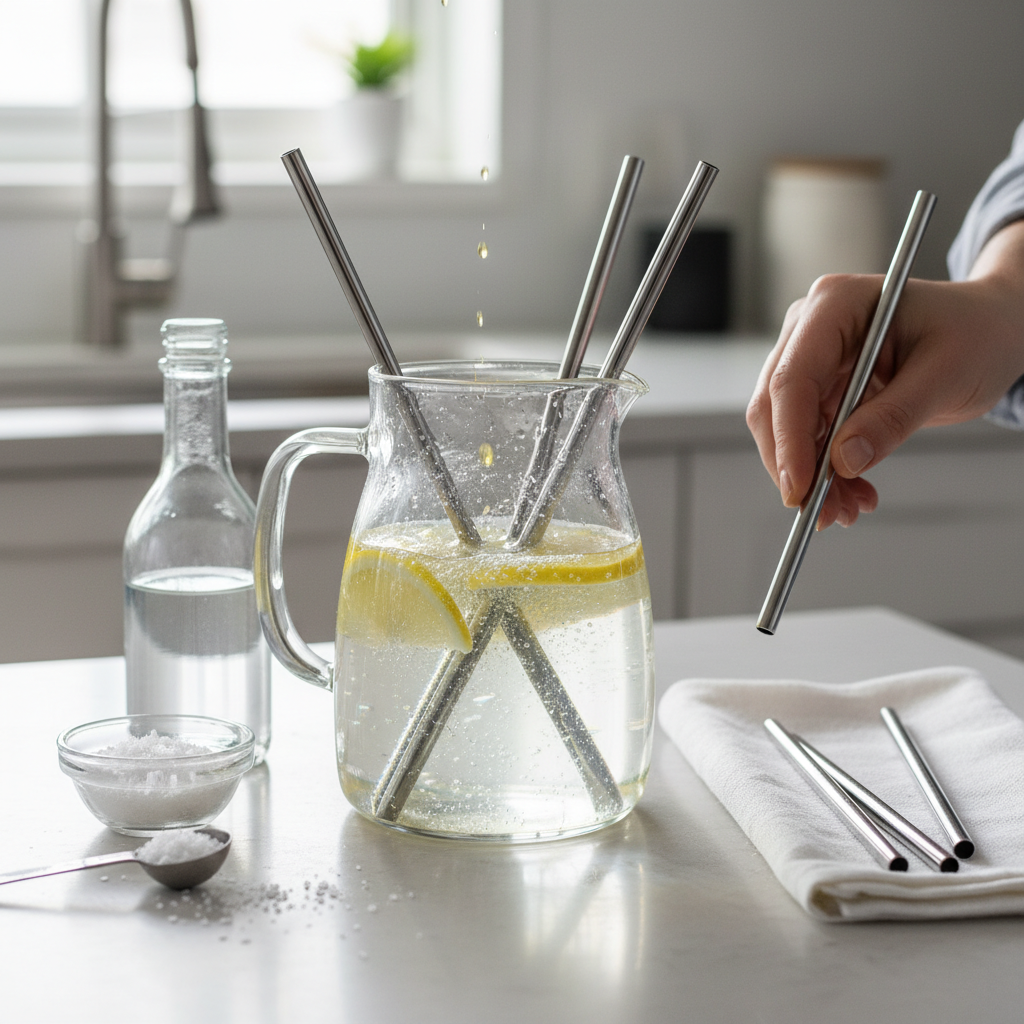
- Mix Solution: In a small bowl, combine a tablespoon of coarse salt (like sea salt or kosher salt) with a few drops of water to form a thick paste.
- Apply Internally: For straighter straws, you might be able to push a small amount of the paste through with your finger or a slim utensil. For bent straws, try to get some paste onto a long Q-tip or a piece of dental floss, then work it through.
- Scrub (Gently): Gently rub the inside surfaces with the salt paste. The abrasive nature of the salt will help lift stains.
- Rinse Thoroughly: Rinse under hot water until all salt and residue are gone.
Vinegar & Baking Soda Deep Clean
This dynamic duo is a powerhouse for sanitizing, deodorizing, and breaking down tough buildup through effervescent action.
Steps (Soak Method):
- Vinegar Soak: Fill a glass with equal parts white vinegar and warm water. Submerge the straws and let them soak for several hours or overnight to loosen grime and disinfect.
- Baking Soda Rinse/Paste: After the vinegar soak, rinse the straws. For extra cleaning, make a paste of baking soda and a little water. Use a Q-tip or a small piece of cloth on a wire to gently scrub the interior.
- Rinse: Flush thoroughly with hot water.
Steps (Effervescent Shake Method for Sticky Residue):
- Combine Ingredients: In a narrow glass or bottle that can be sealed, combine 1 tablespoon baking soda, 1 tablespoon white vinegar, and ½ cup warm water.
- Insert & Shake: Immediately insert the straw, seal the top with your thumb (or a lid), and shake vigorously for about 20 seconds. The fizzing reaction will lift and dislodge residue.
- Soak & Rinse: Let it sit for 2-3 minutes, then rinse thoroughly with hot water. For stubborn residue, repeat or add ½ teaspoon of salt. This method is highly effective for sticky films, leveraging gas micro-bursts to create turbulence that flushes residue outwards.
Dishwasher Method (If Applicable)
Many reusable straws are dishwasher safe, offering a convenient way to clean them, though it may not always address internal residue fully.
Steps:
- Pre-Rinse: Always pre-rinse your straws to remove loose debris before placing them in the dishwasher.
- Secure Placement: Place straws upright in the utensil basket or in a mesh bag to prevent them from falling through and becoming lost or damaged.
- Run Cycle: Run your dishwasher on a hot water cycle. The high temperature and detergent will sanitize the straws.
- Dry Thoroughly: Once the cycle is complete, ensure straws are completely dry before storing to prevent water spots or mold. This method works well for stainless steel and some glass/silicone straws, but is not recommended for bamboo.
Important Criteria for Effective Brush-Free Cleaning
Achieving a truly clean reusable straw without a brush relies on understanding a few key principles.
Water Temperature
The temperature of your water plays a critical role.
- Hot Water: Essential for loosening stubborn grime, melting greasy residues, and effectively sanitizing. Immediate rinsing with hot water after use is paramount to prevent debris from drying and caking inside.
- Boiling Water: Offers superior sanitization, killing bacteria, viruses, and protozoa. It is particularly effective for stainless steel and silicone straws. However, exercise caution with glass straws, allowing them to cool naturally to avoid thermal shock and breakage.
Cleaning Agents
Choosing the right cleaning agents is key to tackling different types of residues and ensuring safety.
- Dish Soap: The golden standard for everyday cleaning, dish soap effectively emulsifies grease and food particles.
- White Vinegar: A natural disinfectant and deodorizer, vinegar is excellent for breaking down mineral deposits, removing odors, and sanitizing. Use a diluted solution for soaking.
- Baking Soda: A mild abrasive and deodorizer, baking soda works wonders on stains and can be used as a paste or in effervescent reactions with vinegar.
- Salt: Coarse salt can act as a gentle abrasive when combined with water or other cleaning agents, helping to scrub away tough, caked-on residue.
- Avoiding Harsh Chemicals: While bleach can disinfect, it’s generally best to stick to natural, food-safe options like vinegar and baking soda to avoid any residual chemicals, especially for items coming into contact with your mouth.
Drying Techniques
Proper drying is as crucial as cleaning to prevent mold and bacterial growth.
- Air Drying Thoroughly: After washing, ensure your straws are completely dry, both inside and out, before storing.
- Upright Position: Place straws upright in a drying rack or a cup to allow air circulation and water drainage.
- Gravity’s Role: Gravity helps any remaining water droplets evaporate, preventing moisture from getting trapped inside. For bamboo straws, extra care in drying is needed due to their porous nature.
Comparing DIY Cleaning Methods: A Quick Reference
| Method | Efficacy for Sticky Residue | Efficacy for Sanitization | Ease of Use | Materials Suited For | Pros | Cons |
|---|---|---|---|---|---|---|
| Hot Water & Soap Soak | Low-Medium | Medium | Easy | All types | Simple, everyday items, good for daily rinse | May not remove stubborn internal grime |
| Pipe Cleaner / Wire (DIY) | Medium-High | Mechanical (with soap) | Medium | All types (if internal item fits) | Provides internal scrubbing action | Requires a suitable household item to improvise |
| Salt and Water Scrub | Medium-High | Low-Medium | Medium | Glass, Stainless Steel | Natural abrasive, good for stains and odors | May not be ideal for silicone or bamboo, requires manual effort |
| Vinegar & Baking Soda (Soak) | Medium | High | Easy | All types | Excellent sanitization, deodorizes, loosens grime | Requires longer soaking time |
| Vinegar & Baking Soda (Shake) | High | High | Medium | Silicone, Stainless Steel, Glass | Highly effective for sticky residue, creates agitation | Requires a sealable container, immediate action after mixing |
| Dishwasher | Low-Medium | High | Easy | Stainless Steel, some Glass/Silicone | Convenient for sanitization | May not clean internal debris thoroughly, not for all materials |
Maintaining Your Reusable Straws for Long-Term Hygiene
Consistent care is key to extending the life of your reusable straws and ensuring they remain a healthy, sustainable choice.
Post-Use Rinse
The most important habit for any reusable straw owner is to rinse it immediately after each use. Don’t let sugary drinks, milk, or smoothie residues dry and harden inside. A quick flush with hot water can prevent up to 80% of potential cleaning headaches later on. If you’re on the go, even a quick swish in a water bottle is better than nothing until you can perform a more thorough clean. This simple step saves time and effort, preventing stubborn buildup.
Regular Deep Cleaning Schedule
While immediate rinsing handles daily residues, a regular deep clean is vital for sanitization and tackling any accumulated film. Aim to deep clean your straws using methods like boiling, vinegar, or the baking soda-vinegar shake method at least once a week, or more frequently if you use them for thick beverages like smoothies or protein shakes. For bamboo straws, a monthly deep clean with a mild soap and thorough drying is sufficient, given their susceptibility to moisture-related issues.
Storage Tips
How you store your straws impacts their cleanliness and longevity.
- Completely Dry: Always ensure straws are bone-dry before storing them. Moisture is mold’s best friend.
- Airtight vs. Air Circulation: While small cases are convenient for travel, for home storage, an upright holder that allows air circulation is ideal. This prevents any residual moisture from becoming trapped.
- Clean Environment: Store your straws in a clean drawer or container, away from dust and other kitchen contaminants.
Expert Tips for a Spotless, Brush-Free Clean
Even without a specialized brush, you can achieve impeccably clean reusable straws with a few expert insights. The key is to leverage the power of chemistry and simple mechanics. Think of soaking as giving the cleaning agents time to work their magic, breaking down and dissolving residue. When you can’t manually scrub, create turbulence. Shaking a sealed container with your straws and a cleaning solution (especially the baking soda and vinegar mix) effectively mimics the scrubbing action of a brush by using effervescence and liquid movement to dislodge particles. Consistency is your best friend – a quick rinse after every use drastically reduces the effort needed for a deep clean. Don’t underestimate the power of hot water; it’s a fundamental element in dissolving sugars and sanitizing. Finally, always inspect your straws before and after cleaning, especially clear glass or silicone ones, to ensure no hidden gunk remains. If a straw still looks or smells unclean, repeat a deep-cleaning method. Your health and your planet will thank you.
Conclusion
Embracing reusable straws is a powerful commitment to sustainability, and keeping them clean doesn’t require an arsenal of specialized tools. With the DIY methods outlined – from the simplicity of a hot water and soap soak to the dynamic effervescence of vinegar and baking soda – you have everything you need to ensure your straws remain hygienic and pleasant to use. Remember the importance of immediate rinsing, regular deep cleaning, and proper drying techniques to prevent buildup and maintain their longevity. By incorporating these easy, brush-free cleaning hacks into your routine, you can confidently sip your favorite beverages, knowing you’re making a positive impact on both your health and the environment. Which brush-free cleaning method will you try first to keep your reusable straws sparkling clean?
Câu Hỏi Thường Gặp
How often should I clean my reusable straw without a brush?
For optimal hygiene, rinse your reusable straw immediately after each use with hot water. A thorough deep clean using a soak or effervescent method is recommended at least once a week, especially if you use it for thick beverages like smoothies or milk.
Can I use rubbing alcohol to clean my reusable straw?
While rubbing alcohol can sanitize, it is not recommended for cleaning reusable straws as it is not food-safe and could leave a harmful residue. Stick to food-grade cleaning agents like dish soap, white vinegar, or baking soda for safe and effective cleaning.
What if my straw still smells after cleaning without a brush?
A lingering odor often indicates stubborn bacterial or mold growth. Try a deep soak in a solution of equal parts white vinegar and warm water overnight. Alternatively, the baking soda and vinegar effervescent shake method can be highly effective at eliminating odors by lifting deeply embedded residues.
Are there any straw materials that are easier to clean without a brush?
Glass straws are generally easier to clean without a brush because their transparency allows you to visually identify any remaining residue, ensuring thorough cleaning. Stainless steel straws are also relatively easy to clean with soaks and hot water due to their non-porous surface.
How do I dry a reusable straw effectively without a brush?
After cleaning, rinse your straw thoroughly and shake out as much water as possible. Place it upright in a drying rack or cup, allowing air to circulate through it. This position uses gravity and airflow to ensure the interior dries completely, preventing mold or mildew growth.